
Every Product on Every Shelf Has a Story That Starts With a Machine
Think about the last thing you pulled off a supermarket shelf. A box of cereal. A bottle of shampoo. A blister pack of tablets. A bag of coffee. Each of those products was filled, sealed, labelled, and packaged at speed by machinery designed specifically for that purpose — and the quality of that machinery, the precision of its operation, and the reliability of its performance shaped the product you received before you ever touched it.
Packaging machines are the largely invisible infrastructure of modern consumer goods manufacturing. They work in factories most consumers never see, performing operations most people never think about, at speeds and volumes that human hands could never match. Understanding what these machines do — and what distinguishes good ones from great ones — matters for anyone involved in bringing products to market.
The Breadth of the Category
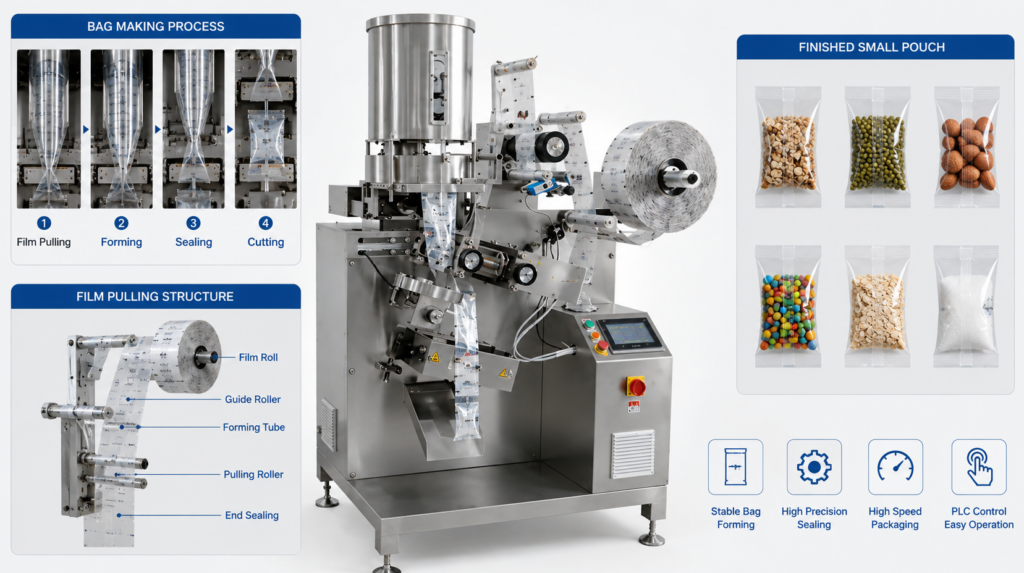
The term packaging machines covers a genuinely enormous range of equipment. At the primary packaging level — the package that directly contains the product — there are filling machines for liquids, pastes, powders, and solids; capping and sealing machines; labelling machines; blister packaging machines; and pouch forming and sealing systems. At the secondary packaging level, there are cartoning machines, case erectors and packers, shrink wrappers, and tray formers. At the tertiary level, there are palletisers, stretch wrappers, and strapping machines.
Each category contains further specialisation — the filling machine for thin liquids is a different product from the one designed for viscous pastes, and both are different from the one designed for dry powders. Navigating this complexity to identify the right packaging machines for a specific application requires a combination of process knowledge, product understanding, and familiarity with the equipment landscape.
What Makes Packaging Machines Worth Investing In
The business case for investing in quality packaging machines rests on several foundations. Speed is the most obvious — a machine that packages a thousand units per hour does in sixty minutes what a manual operation might take a week to accomplish. But speed is only part of the story. Consistency is equally important — machines that seal every pouch to the same standard, fill every bottle to the same volume, apply every label in the same position, produce a product quality that manual operations cannot reliably match at scale.
The third foundation is economics. Once the capital investment is recovered, the variable cost of machine-operated packaging is primarily energy and consumables — costs that are highly predictable and largely stable. Labour costs, by contrast, vary with availability, productivity, turnover, and legislation. Packaging machines convert a variable, management-intensive cost into a fixed, manageable one.
The Technology Has Changed Dramatically
Packaging machines from twenty years ago were primarily mechanical systems — cams, linkages, and fixed-speed motors executing defined sequences of movement. Modern packaging machines are servo-driven, software-controlled systems where motion profiles, timing sequences, and adjustment parameters can be modified through a touchscreen without changing any physical component. This shift has transformed what is achievable in terms of flexibility, precision, and intelligence.
Recipe-based format changeover, integrated vision inspection, real-time performance monitoring, predictive maintenance alerts, and connectivity with production management systems are all standard features on contemporary packaging machines that simply didn’t exist in earlier equipment generations. For manufacturers specifying new packaging lines, this technology evolution means that the equipment being considered today is genuinely more capable than anything available in the recent past.
The Human Element That Technology Hasn’t Replaced
Despite decades of automation progress, packaging machines still require skilled people to operate, maintain, and optimise them. The operator who understands why a film tension setting affects seal quality, the maintenance engineer who can read a vibration signature as an early indicator of bearing wear, the line manager who can look at an OEE report and identify the root cause of an efficiency gap — these people create the value that the machines make possible.
The companies that get the most from their packaging machine investments are those that treat equipment and people as complements rather than substitutes. The machine provides the speed and consistency. The people provide the judgment, the adaptability, and the continuous improvement mindset that keeps the machine performing at its best over the years and decades of its operational life.
